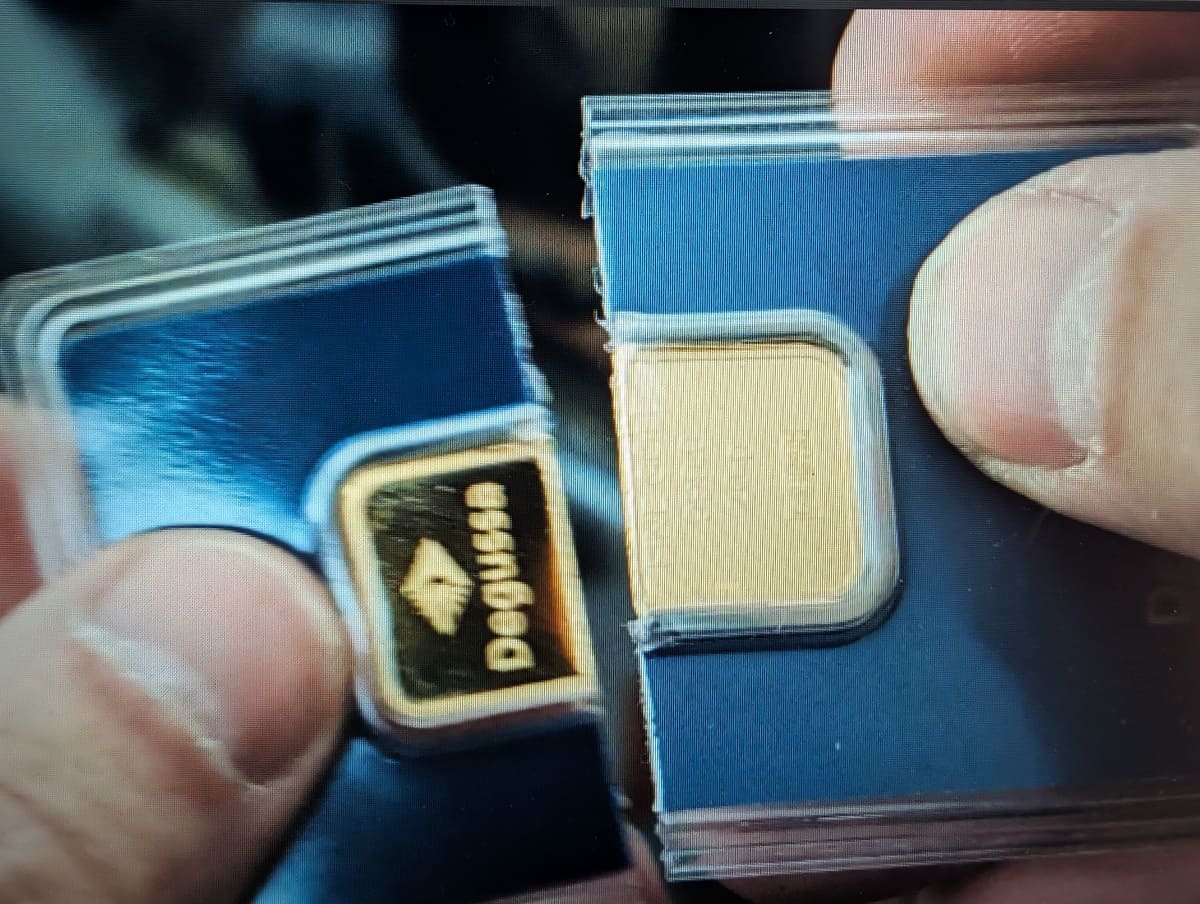
The transformation of fine gold into 18 karat gold (also known as 750 gold) is a precise and essential technique in professional goldsmithing. Pure gold, while highly valued for its brilliance and resistance to corrosion, is too soft for most practical jewelry applications. To improve its mechanical strength and wear resistance, it is alloyed with complementary metals such as silver and copper.
In this process, a gold bar is first sectioned to obtain 9 grams of fine gold. This gold is then carefully melted together with a calculated proportion of silver and copper, resulting in a final alloy weight of 12 grams. The ratio ensures that gold represents 75% of the total mass—defining the alloy as 18 karat gold.
The inclusion of silver contributes to a lighter tone and increased malleability, while copper adds warmth to the color and significantly improves hardness. The exact balance between these metals allows goldsmiths to fine-tune both the color profile and working properties of the alloy.
Once homogenized through controlled melting and proper mixing, the molten metal is cast into a workable form. From this point, the 18K gold can be processed using traditional techniques such as rolling, forging, soldering, and stone setting to create durable and refined jewelry pieces.
Mastering this alloying process is a cornerstone of goldsmithing, requiring not only precise measurement but also a deep understanding of metal behavior at high temperatures, ensuring a consistent and high-quality result suitable for professional jewelry production.
Please click on Additional information to find a list of needed tools and further information on this tutorial.