Capturing Natural Wood Textures in Sterling Silver Jewelry
Organic surfaces found outdoors often reveal patterns that cannot be replicated by hand. Weathered wood, tree bark, and aged fences develop complex textures over time. These structures make excellent inspiration for unique jewelry pieces. In this tutorial, a natural wood texture from an outdoor fence is transformed into a sterling silver pendant using Metal Clay paste and molding silicone.
Step 1: Creating a Silicone Mold from Natural Wood
The first step is capturing the structure of the wood. A small amount of kneadable molding silicone is pressed directly onto the wooden surface. Materials such as old fences, tree bark, or weathered wooden boards work particularly well because their surfaces contain rich natural detail.
After the silicone cures, it forms a flexible mold that perfectly preserves the grain, cracks, and organic lines of the wood surface.
Step 2: Building the Silver Layer with Metal Clay Paste
Once the mold is ready, it is coated with Metal Clay paste. The paste is brushed onto the mold in several thin layers, allowing each layer to dry slightly before applying the next. This gradual buildup ensures that the delicate wood texture remains clearly visible.
To strengthen the final piece, the outer edge is reinforced with fresh Metal Clay, creating a thicker frame that will later function as the structure of the pendant.
Step 3: Firing and Recrystallization
After the clay has fully dried, the piece is carefully removed from the mold and fired with an open torch flame. During firing, the organic binder burns away and the microscopic silver particles sinter together, transforming the material into solid sterling silver.
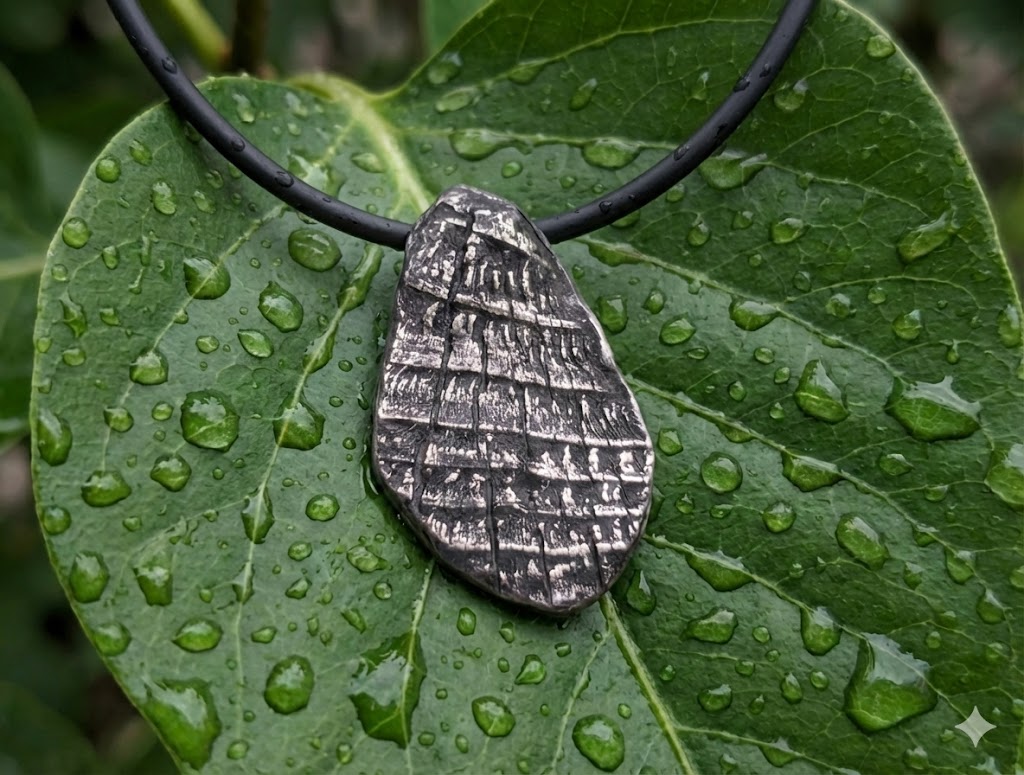
This process preserves the natural wood pattern with remarkable fidelity, allowing even fine details of the original surface to remain visible in the finished metal.
Step 4: Finishing the Pendant
Once fired, the silver can be refined through brushing, polishing, or light patination to enhance the depth of the texture. The final result is a striking silver pendant that carries the imprint of a real natural surface — a small piece of outdoor texture transformed into wearable art.
Please click on Additional information to find a list of needed tools and further information on this tutorial.