Wood Structures in Sand Casting: Transforming Natural Textures into Unique Silver and Gold Jewellery
Organic surfaces have long inspired contemporary jewellery design, yet few materials offer the unpredictable beauty of wood. From weathered branches to the coarse texture of playground mulch, natural wood reveals intricate grain patterns and irregular reliefs that bring character and movement to metal surfaces.
In professional goldsmithing, these structures can be preserved through the traditional sand casting process — a technique valued for its directness, spontaneity, and textural precision.
Capturing Natural Wood Grain in Metal
The process begins by selecting a piece of wood with a compelling surface. Deep grain lines, cracks, and layered fibers create the most expressive results. The wood is pressed firmly into fine casting sand, leaving behind a highly detailed negative impression.
Once the mold is prepared, molten silver or gold is poured into the cavity. The metal flows into every recess of the sand mold, capturing even subtle organic textures. After cooling, the casting is removed, cleaned, and refined at the bench.
Unlike industrial production methods, sand casting jewellery celebrates slight irregularities. Small variations and organic edges are not flaws — they are part of the aesthetic language of the technique.
Designing Rings and Pendants with Texture Contrast
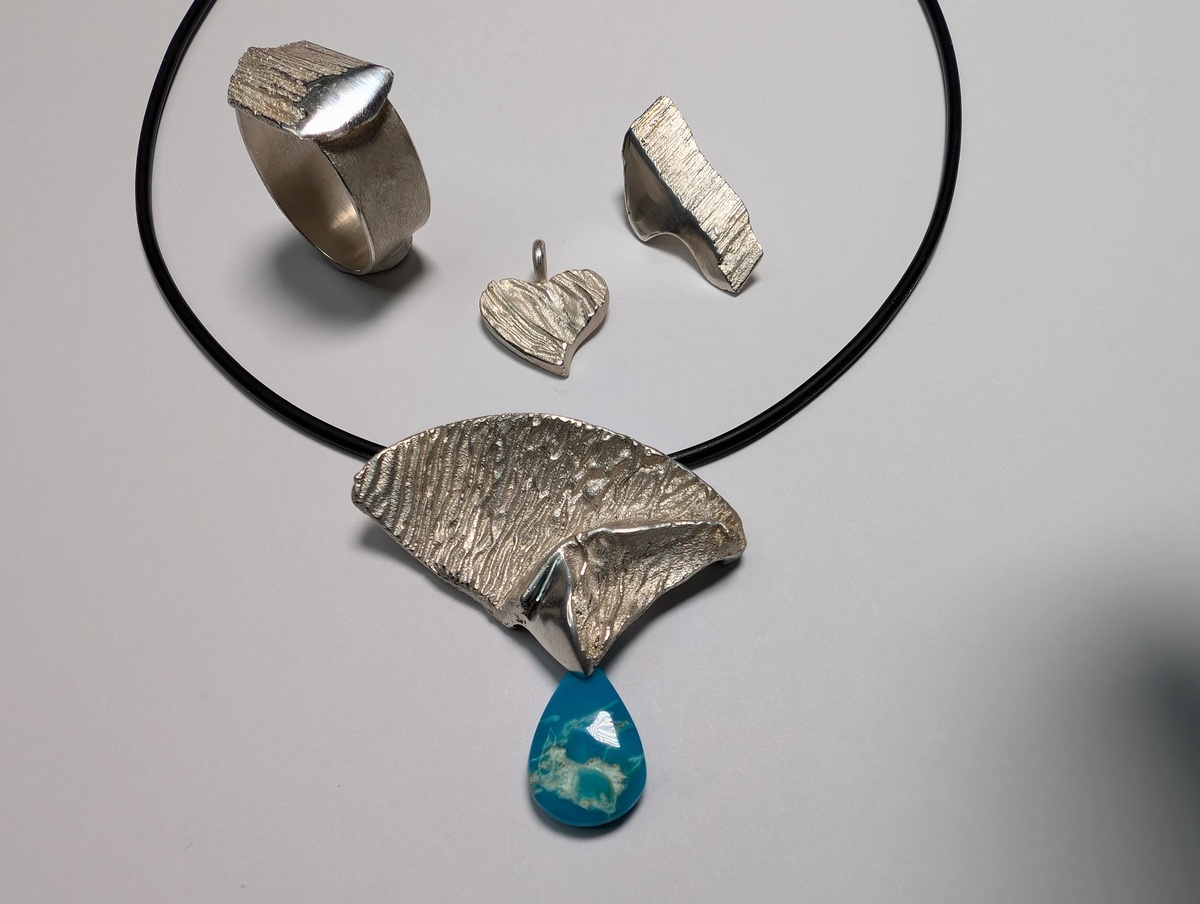
One of the most compelling design approaches is the deliberate contrast between raw texture and mirror finish. The textured surface, derived from the wood structure, is often combined with carefully polished areas.
This interplay between matte relief and high-gloss metal enhances depth and creates a tactile, sculptural effect. The result is jewellery that feels both natural and contemporary — bold rings with strong surfaces or expressive pendants that highlight the individuality of the casting.
Why Sand Casting Is Ideal for Organic Forms
Compared to other casting methods, sand casting allows for rapid experimentation. The mold is created directly from the natural material, eliminating the need for wax carving or complex modeling. This makes it particularly suitable for capturing spontaneous structures and transforming them into wearable art.
For goldsmiths and jewellery designers seeking authenticity, wood texture casting offers an exciting pathway. Every ring or pendant carries the imprint of a once-living material, preserved forever in precious metal.
Conclusion
Wood structures translated into silver or gold embody the dialogue between nature and craftsmanship. Through the sand casting method, irregular organic surfaces become refined yet powerful design elements.
The contrast of raw grain against polished metal creates jewellery that is distinctive, tactile, and timeless — proof that some of the most compelling forms are already written in nature.
Please click on Additional information to find a list of needed tools and further information on this tutorial.